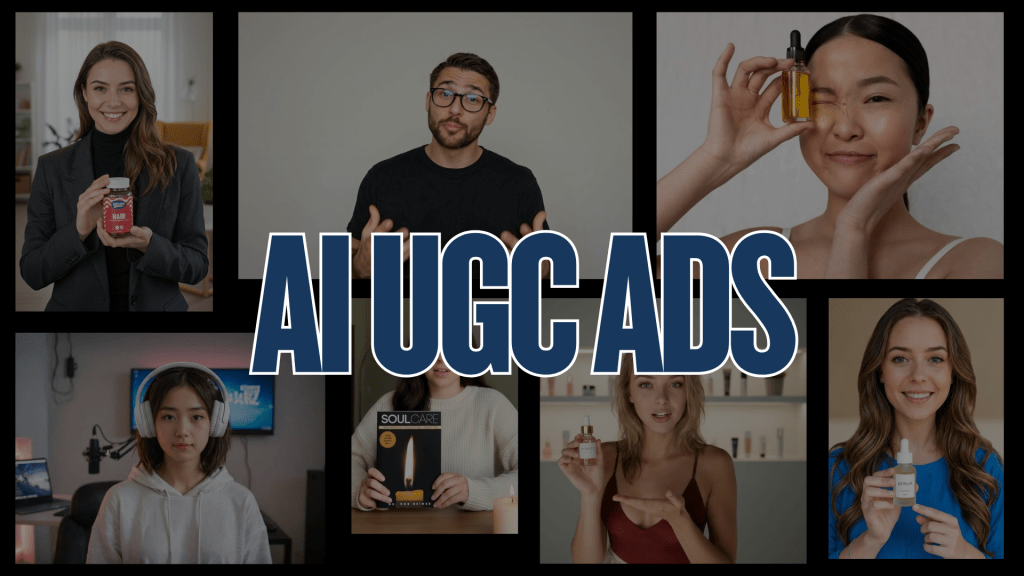
In the fast-paced world of ecommerce, where consumers scroll endlessly through social feeds, AI UGC ads are emerging as a true performance engine.
Unlike traditional UGC that depends on real customers recording and submitting content, AI UGC recreates that authentic, relatable style using artificial intelligence — at scale, on demand, and optimized for performance.
A 2025 Stackla report found that authenticity influences 79% of purchase decisions. Meanwhile, AI production tools reduce creative costs by up to 90%. The combination is powerful: AI recreates the feeling of authenticity while giving brands total control over messaging, personalization, and scale.
As platforms like TikTok and Instagram prioritize short-form, native-style video, ecommerce brands that rely only on polished studio ads are losing attention. AI UGC bridges the gap between authenticity and scalability.
Let’s explore the biggest AI UGC trends reshaping ecommerce advertising.
What Are AI UGC Ads?
AI UGC ads refers to UGC-style content generated using artificial intelligence — not manually recorded organic content.
Instead of waiting for customers to submit reviews or shooting influencer content repeatedly, brands use AI tools to:
- Generate realistic AI avatars
- Convert scripts into UGC-style videos
- Clone product testimonials
- Personalize creatives dynamically
- Launch ad-ready videos instantly
Platforms like Tagshop AI create UGC-style video ads that look native to TikTok, Instagram Reels, YouTube Shorts, and Facebook — but are fully AI-generated and performance-optimized.
The result? Authentic-looking ads without relying on unpredictable organic submissions.
Trend 1: Hyper-Personalized AI UGC at Scale
AI enables UGC-style ads to feel custom-made for every viewer.
Instead of one generic testimonial, AI creates thousands of personalized variations using:
- Demographic targeting
- Behavior-based scripting
- Geo-based references
- Dynamic product swaps
How It Works
- AI avatars match the audience profile
- Scripts adapt to customer pain points
- Backgrounds and visuals change dynamically
- Messaging aligns with browsing behavior
For example, a fitness brand can generate multiple AI UGC ads showing “people like you” reviewing their leggings — each tailored to a specific audience segment.
Platforms like OpusClip help repurpose AI UGC moments into high-performing variations for A/B testing.
Performance marketers report 2–5x higher CTR when AI personalization is applied correctly.
Trend 2: AI Digital Twins for Infinite UGC Creation
One of the biggest limitations of organic UGC is volume. AI eliminates that bottleneck.
The Rise of Digital Twins AI
AI digital twins replicate human likeness — voice, gestures, expressions — and turn scripts into realistic UGC-style reviews.
Platforms like:
- Tagshop AI
- Synthesia
- HeyGen
allow ecommerce brands to produce testimonial-style videos in minutes.
Ecommerce Impact
- Generate hundreds of ad creatives weekly
- Test hooks without reshooting
- Create localized variations instantly
- Reduce production costs from thousands to under $50 per video
Instead of waiting for creators, brands control creative output while maintaining a native UGC feel.
Trend 3: AI-Powered UGC Video Ad Automation
AI doesn’t just create UGC — it turns it into performance-ready ads automatically.
AI Automation Capabilities
- Script-to-video generation
- URL-to-video conversion
- Auto product extraction
- Dynamic captions
- Performance-based editing
Tools like Veed.io automatically format AI UGC for vertical platforms, add subtitles, trending effects, and optimize pacing for social feeds.
This allows brands to go from product page → AI UGC ad → live campaign within hours.
Trend 4: Multimodal AI UGC for Cross-Platform Scaling
AI UGC is no longer limited to one format.
Modern AI tools convert:
- Text → UGC video
- Product image → UGC Reel
- Script → AI testimonial
- URL → short-form ad
- Long-form video → multiple Shorts
Platforms like:
- Shopify
- Tagshop AI
help ecommerce brands distribute AI-generated creatives across TikTok, Instagram, YouTube Shorts, and Meta Ads seamlessly.
Brands report up to 3x engagement improvement compared to static creatives.
Trend 5: Predictive AI UGC Campaigns
The next evolution? AI that predicts what UGC-style content will convert before launch.
Advanced AI models analyze:
- Viral trends
- Hook performance
- Scroll behavior
- Emotional sentiment
- Comment analysis
Instead of reacting to trends, brands can proactively generate AI UGC ads aligned with upcoming demand spikes.
This shifts ecommerce marketing from reactive to predictive.
Challenges & Ethical Considerations
AI UGC must be used responsibly.
Key Concerns
- Deepfake misuse
- Consent & likeness rights
- Transparent AI disclosure
- Bias in AI-generated avatars
Watermarking technologies like Google’s SynthID are emerging to ensure authenticity transparency.
Brands should clearly disclose AI-generated content and combine AI efficiency with human oversight.
Authenticity remains the core driver of trust — even when powered by AI.
The Future of AI UGC Ads
By 2027, most ecommerce ads are expected to be AI-generated or AI-assisted.
Future innovations include:
- AR-powered AI UGC try-ons
- Voice-based AI testimonial ads
- Shoppable AI avatars
- Real-time creative optimization
AI UGC is evolving from a creative tool into a full-funnel performance engine.
How E-commerce Brands Can Get Started with AI UGC
- Audit current creative production costs
- Implement an AI UGC video generator
- Test AI avatars vs static creatives
- Track CTR, ROAS, and conversion rates
- Scale what performs
AI-generated UGC isn’t replacing authenticity — it’s engineering it at scale.
For e-commerce brands focused on growth, AI UGC is no longer optional. It’s the new creative infrastructure.


Leave a Reply